Peter Attia's longevity medicine insights in 60 seconds. Cancer prevention, healthspan tactics, and metabolic health. Updated weekly.

25 AI-powered summaries • Last updated Jan 30, 2026

This page tracks all new videos from Peter Attia and provides AI-generated summaries with key insights and actionable tactics. Get email notifications when Peter Attia posts new content. Read the summary in under 60 seconds, see what you'll learn, then decide if you want to watch the full video. New videos appear here within hours of being published.

Latest Summary

Why Women Show Earlier Alzheimer’s Changes in Midlife | Lisa Mosconi, Ph.D.

8:031 min read7 min saved

Key Takeaways

  • Women disproportionately develop Alzheimer's disease at a 2:1 ratio compared to men, a disparity not fully explained by women's longer lifespan alone.
  • While aging is a factor, the longevity gap between men and women (typically 2-3 years) does not account for the 2:1 prevalence of Alzheimer's, nor does it explain why women are disproportionately affected by Alzheimer's but not other age-related neurodegenerative disorders like Parkinson's.
  • Brain imaging in midlife (ages 45-65) shows women with higher red flags for Alzheimer's disease and faster progression of brain lesions compared to men of the same age and symptom severity.
  • Women may mask early Alzheimer's symptoms due to a higher cognitive reserve, particularly in verbal memory, making diagnosis more difficult in the early stages.
  • Alzheimer's disease is presented not as a disease of old age, but as a midlife disease with symptoms manifesting later, suggesting that specific midlife factors affecting women contribute to their increased long-term risk.
  • More Peter Attia Summaries

    25 total videos
    How Women Can Start Alzheimer’s Prevention | Lisa Mosconi, Ph.D.10:17

    How Women Can Start Alzheimer’s Prevention | Lisa Mosconi, Ph.D.

    ·10:17·9 min saved

    • For women, especially those in midlife, a serious conversation about hormone replacement therapy (HRT) is crucial for Alzheimer's prevention, considering the rapid advancements in research and its potential benefits for brain health beyond immediate menopausal symptoms. • Alzheimer's prevention predominantly relies on lifestyle interventions, referred to as the "ABCs," which include diet, exercise, stress reduction, sleep hygiene, and managing medical conditions like high blood pressure, insulin resistance, diabetes, and obesity. • Consistency in lifestyle choices is paramount for brain health; frequent switching between diets (e.g., keto to vegan) is less effective than sustained adherence to beneficial patterns. • Regarding exercise, moderate intensity performed frequently appears most conducive to overall health gains for women in midlife, with a potential sweet spot possibly exceeding Zone 2, but intensity and duration should be tailored to individual time availability. • The brain requires consistent, long-term stimulation to build resilience and structural permanence, unlike the rest of the body which shows quicker changes; this extended timeframe for brain adaptation means both damage and resilience take time to develop. • Investing in brain health is an investment in cognitive resilience and brain reserve, supported by realistic daily actions like physical movement (which produces BDNF and irisin) and reducing inflammation and oxidative stress, ultimately aiming to align cognitive lifespan with overall lifespan.

    381‒Alzheimer’s disease in women: how hormonal transitions impact the brain, new therapies, & more2:14:40

    381‒Alzheimer’s disease in women: how hormonal transitions impact the brain, new therapies, & more

    ·2:14:40·134 min saved

    • Alzheimer's disease disproportionately affects women (2:1 ratio), with aging being a primary, but not sole, explanation; current research suggests biological differences and potentially earlier onset of disease pathology in women, starting in midlife. • Women exhibit more Alzheimer's-related brain changes (e.g., atrophy in medial temporal lobe, hippocampal volume reduction) in midlife compared to age-matched men, despite performing similarly on cognitive tests due to higher cognitive reserve, particularly in verbal memory. • The perimenopausal transition is a critical period for women's brain health, with new research using PET scans showing increasing estrogen receptor density in the pituitary gland during this phase and post-menopause, contrary to previous findings in animal models. • Hormone therapy initiation timing and formulation are crucial for potential neuroprotection; observational studies suggest a reduced risk of Alzheimer's and dementia for women starting estrogen-only therapy within 10 years of final menstrual period, particularly after hysterectomy, though definitive clinical trials are lacking. • Estrogen's role in the brain is complex; while vital for cognitive function and neuroprotection, its effect may depend on receptor functionality and the presence of existing brain pathology, with concerns that estrogen might exacerbate damage in diseased neurons. • The CARE program, a $50 million research initiative, aims to halve Alzheimer's risk for women by 2050 by investigating neuroendocrine aging, reproductive history as a predictor of cognitive decline, and establishing sex-specific risk factors, as current Alzheimer's prevention models are sex-aggregated and overlook female-specific nuances.

    Is Industrial Processing the Real Problem With Seed Oils? | Layne Norton, Ph.D.8:50

    Is Industrial Processing the Real Problem With Seed Oils? | Layne Norton, Ph.D.

    ·8:50·8 min saved

    • The industrial processing of seed oils involves chemical extraction using hexane, a non-polar solvent, to maximize yield, although this process is more costly than mechanical extraction. • Hexane is used because it effectively dissolves oils and has a low boiling point for easy evaporation; the steam distillation process to remove hexane occurs at relatively low temperatures and over short periods. • Residual hexane levels in commercially available seed oils are extremely low, typically well under one part per million, and often at non-detectable levels. • The primary danger of hexane is from inhalation, not ingestion, and the quantities required to cause even mild side effects through consumption are astronomically high (estimated at 11,340 kg of oil at once for mild effects). • Unlike substances that bioaccumulate, hexane is processed and cleared by the body, making chronic negative outcomes from trace amounts in food highly improbable, especially given its rapid elimination and low concentration. • The increase in linoleic acid availability in the food supply, from less than 3% a century ago to potentially 10% today, is a more significant factor than residual hexane from processing.

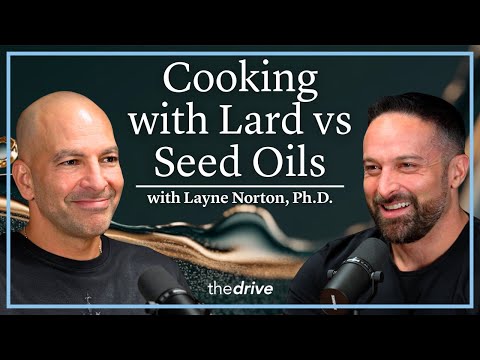
    Cooking with Lard vs Seed Oils | Layne Norton, Ph.D.12:14

    Cooking with Lard vs Seed Oils | Layne Norton, Ph.D.

    ·12:14·11 min saved

    • If avoiding seed oils, displace saturated fat with leaner protein sources or monounsaturated fats like olive oil and avocado oil, which may offer cardiovascular benefits. • Oils in large volumes, like those used in processing under vacuum, have a low rate of oxidation even when heated, unlike thin layers of oil used repeatedly in restaurants which can accumulate negative products quickly. • Both lard and seed oils are considered detrimental for frying, and there's a lack of human randomized controlled trials comparing their effects directly. • Saturated fats are less prone to oxidation when heated compared to unsaturated fats, but the overall impact on cardiovascular disease is complex and not definitively known. • The marketing of foods using lard or tallow as a health improvement can be misleading, potentially causing people to consume more of these calorie-dense items, equating them to health foods when they are not. • Focusing excessively on minor dietary details like cooking oils distracts from larger health drivers such as overall calorie consumption and lack of physical activity, which are more significant contributors to disease in developed countries.

    380 ‒ The seed oil debate: are they uniquely harmful relative to other dietary fats?2:25:59

    380 ‒ The seed oil debate: are they uniquely harmful relative to other dietary fats?

    ·2:25:59·145 min saved

    • The primary argument against seed oils being uniquely harmful relies on the fact that many historical studies cited to prove their detriment were confounded by the inclusion of trans fats, which are now known to be highly atherogenic. • When randomized controlled trials (RCTs) that were not confounded by trans fats are analyzed, they either show a null effect or a benefit from substituting polyunsaturated fats for saturated fats in reducing cardiovascular disease risk. • Mendelian randomization studies, which offer a lifelong randomized control trial by utilizing genetic variants that influence LDL cholesterol, consistently show a dose-response relationship between lower LDL cholesterol and reduced cardiovascular disease mortality, regardless of the mechanism by which LDL is lowered. • While polyunsaturated fats (PUFAs) are more prone to oxidation than saturated fats, oxidation is thought to primarily occur within the endothelium, not the plasma, and PUFA-enriched LDL particles are less likely to be retained, modified, or aggregated within the endothelium compared to saturated fat-enriched particles. • Industrial processing of seed oils, including hexane extraction and heating, actually reduces levels of oxidants and impurities, and the residual amounts of solvents like hexane are far below toxicological thresholds. • The dramatic increase in linoleic acid consumption over the past century is not necessarily indicative of harm, as evolutionary pressures prioritize reproduction over extreme longevity, and the human diet has evolved significantly from ancestral patterns. • For individuals concerned about seed oils, the advice is to focus on overall dietary patterns, such as reducing saturated fat intake and increasing fiber, rather than fixating solely on seed oils, as caloric imbalance and activity levels are significantly larger drivers of chronic disease.

    A guide to cardiorespiratory training at any fitness level to improve longevity (AMA 79 sneak peek)38:22

    A guide to cardiorespiratory training at any fitness level to improve longevity (AMA 79 sneak peek)

    ·38:22·36 min saved

    • Cardiorespiratory fitness (CRF), measured by VO2 max, is the most significant modifiable predictor of both lifespan and healthspan, outperforming factors like blood pressure, cholesterol, BMI, and smoking. • A higher VO2 max indicates greater physiological reserve, enabling the body to better tolerate stressors like infections or surgeries. • VO2 max is expressed in milliliters of oxygen per kilogram of body weight per minute, and can be estimated using METs (metabolic equivalents), where 1 MET equals 3.5 ml/kg/min. • Cardiorespiratory fitness declines predictably with age (about 10% per decade), but maintaining a high VO2 max preserves the ability to perform physical activities as oxygen demand remains constant. • The "cardiorespiratory fitness triangle" model suggests maximizing aerobic capacity requires both a wide base (sustained submaximal effort, improving fat oxidation and mitochondrial efficiency) and a high peak (maximum aerobic output, driven by oxygen delivery and cardiac output). • Zone 2 training, characterized by exercising at an intensity where lactate enters the bloodstream but is still cleared by the body (around 2 millimolar lactate), is crucial for building the base of this triangle. • While high-intensity interval training (HIIT) provides greater adaptation per unit of time, Zone 2 training is more sustainable for increasing overall training volume, which is the primary driver of adaptation, especially for long-term health and longevity. • For individuals with limited exercise time (e.g., 150 minutes per week), high-intensity training might be more efficient for adaptation, but for those aiming for optimal results over decades, higher training volume, including Zone 2, is essential. • Mitochondria, the "power units" of cells, produce ATP (energy currency) through aerobic pathways using fatty acids or pyruvate (from glucose). • Type I (slow-twitch) muscle fibers, rich in mitochondria, excel at oxidizing fat and are slow to fatigue, performing work at lower intensities, while Type II (fast-twitch) fibers are recruited at higher intensities and rely more on glycolysis, leading to faster fatigue and lactate production. • The first lactate threshold (around 2 millimolar lactate) signifies the point where the body's systemic tissues can clear lactate, representing Zone 2, while the second lactate threshold (typically 4-5 millimolar lactate) indicates when lactate production overwhelms clearance, leading to acidity and muscle fatigue. • While high-intensity exercise is important, the practicality and safety of higher training volumes are best achieved through Zone 2 training, making it the cornerstone for athletes aiming for longevity.

    How Early Training Choices Shape Women’s Health for Life | Abbie Smith-Ryan, Ph.D.6:47

    How Early Training Choices Shape Women’s Health for Life | Abbie Smith-Ryan, Ph.D.

    ·6:47·6 min saved

    • Osteoporosis is effectively a childhood disease for women, as they reach peak bone density around age 19, and subsequent bone health relies on this early foundation. • Engaging in diverse physical activities and resistance training from a young age is crucial for building a strong musculoskeletal system, preventing injuries, and establishing lifelong fitness. • Intense exercise can delay the onset of menstruation in young athletes, which can negatively impact bone density due to delayed estrogen exposure, sometimes exacerbated by caloric restriction or over-exercise. • Athletes in sports involving asymmetric movements or high impact, such as gymnastics, high jumping, and pole vaulting, may develop spinal curves (not necessarily full scoliosis) due to the nature of their training, highlighting the importance of early spinal stability. • The menstrual cycle itself can impact female athletes' performance, recovery, and mental health, underscoring the need for open conversations and education about reproductive health in sports.

    How Busy Moms Can Build Strength and Cardio Fitness | Abbie Smith-Ryan, Ph.D.6:57

    How Busy Moms Can Build Strength and Cardio Fitness | Abbie Smith-Ryan, Ph.D.

    ·6:57·6 min saved

    • Busy moms can build strength and cardio fitness by dedicating 3 hours per week to training, split between resistance and aerobic exercise. • Prioritize whole-body progressive resistance training 2 days a week, with sessions lasting approximately 30 minutes each, focusing on 6-8 reps at 60-80% of 1RM, with 30 seconds rest between exercises and 2 minutes between sets. • For cardio, aim for at least one day a week of high-intensity interval training (HIIT), ideally two days, using a protocol of 10 sets of 1 minute on, 1 minute off, with the "on" minute at an intensity that is very challenging, aiming for 90-110% of VO2 max or perceived exertion, for a total of 20 minutes including warm-up and cool-down. • On remaining cardio days or time, incorporate low-intensity steady-state exercise like walking or cycling to promote blood flow and recovery. • For HIIT, if precise metrics like VO2 max are unavailable, instruct individuals to select an intensity where they can only sustain the effort for one minute before needing a break, focusing on perceived exertion. • HIIT, even if not hitting precise intensity targets, still offers significant benefits, and finding a feasible protocol like 1 minute on/1 minute off is key for consistency.

    378 ‒ Women’s health & performance: how training, nutrition, & hormones interact across life stages2:24:21

    378 ‒ Women’s health & performance: how training, nutrition, & hormones interact across life stages

    ·2:24:21·143 min saved

    • Women's health and performance are intricately linked to training, nutrition, and hormonal fluctuations across life stages, emphasizing the need for personalized strategies rather than one-size-fits-all approaches. • Early engagement in diverse physical activities, including resistance training like Romanian deadlifts, is crucial for building a strong foundation for bone and muscle health, potentially mitigating issues like scoliosis later in life. • Intense exercise in young female athletes can delay menarche, impacting estrogen levels and bone density, highlighting the importance of adequate nutrition and avoiding overtraining. • During the menstrual cycle, women may experience varying energy levels and recovery capacities, with the luteal phase often characterized by fatigue and bloating, suggesting potential adjustments in training intensity and focus on recovery. • Nutrient timing, particularly adequate protein intake (around 1.6-2.0 g/kg) and sufficient calories from nutrient-dense sources like healthy fats, is essential for young female athletes to support performance and recovery, especially when managing busy schedules. • As women approach menopause, muscle quality can decline significantly, underscoring the increased importance of consistent resistance training and potentially higher intensity exercise to maintain muscle mass and metabolic flexibility. • In midlife and beyond, prioritizing progressive resistance training (2-3 days/week) and high-intensity interval training (1-2 days/week) can be highly effective for body composition changes and overall health, even with limited training time. • Hormone replacement therapy and the judicious use of medications like GLP-1 agonists can be valuable tools for women, but they must be complemented by targeted nutrition and resistance training to preserve muscle mass and optimize outcomes. • Power development, crucial for preventing falls and maintaining functional independence, becomes increasingly important as women age and may require specific training considerations, even amidst potential joint pain or fatigue. • It's vital to dispel the myth that women in midlife cannot gain muscle or strength; consistent, appropriate training stimulus, tailored to individual needs and goals, can yield significant improvements at any age. • The combination of exercise and hormone therapy offers a potent synergistic effect, potentially enhancing energy levels, training capacity, and overall health outcomes for midlife women, though individual responses and proper prescription are key. • Misconceptions about exercise, such as rigid rules dictating specific training modalities, can be harmful; empowerment through personalized strategies, consistency, and understanding individual responses is more beneficial.

    How to Actually Start a Habit | James Clear7:43

    How to Actually Start a Habit | James Clear

    ·7:43·7 min saved

    • To help someone start a habit when they lack intrinsic desire, make the habit incredibly small, such as doing only one push-up or going to the gym for five minutes. • Simplify the process by focusing on just one habit at a time, eliminating other potential tasks until the initial habit is established and momentum is built. • Optimize the environment to make desired behaviors easier and undesired behaviors harder, as this requires only a short burst of motivation to implement and can sustain behavior change for an extended period. • When coaching or encouraging others, focus on praising and reinforcing good behaviors while ignoring or downplaying mistakes, similar to training a pet, to naturally guide individuals towards desired actions. • The strategy of "praise the good, ignore the bad" can be highly effective but requires significant patience and consistency over long periods, sometimes up to a year or more.

    How Your Environment Quietly Controls Your Habits | James Clear10:02

    How Your Environment Quietly Controls Your Habits | James Clear

    ·10:02·9 min saved

    • The environment acts as a form of gravity, subtly pulling individuals towards predictable behaviors, often making it impossible to resist old habits without changing surroundings. • Soldiers addicted to heroin in Vietnam returned to the US and 90% recovered because they were removed from the environment that prompted their addiction, unlike typical drug addicts who return to the same environment after rehab. • To change habits, focus on making desired behaviors obvious and easy by redesigning your environment to present cues for good choices and removing cues for bad ones. • Examples of environmental design include placing healthy food on the counter, hiding the TV remote in a drawer, and moving audiobook apps to the phone's home screen while tucking other apps away. • To manage difficult cravings like "wheat thins," a strategy involves making the desired item difficult to access, such as freezing cookie dough balls so only a few can be baked at a time, adding friction to the decision-making process. • Environmental control can be strengthened through accountability partners, such as a spouse, who can encourage adherence to habits like working out or eating healthily, preventing downward spirals.

    The Three Components of Meaning in Life | Peter Attia & Arthur Brooks12:45

    The Three Components of Meaning in Life | Peter Attia & Arthur Brooks

    ·12:45·12 min saved

    • Meaning in life is composed of three components: coherence (believing things happen for a reason), purpose (having direction and a "north star"), and significance (believing your existence matters). • A "meaning crisis" can be diagnosed by one's inability to answer two questions: "Why are you alive?" and "For what are you willing to die today?". • The answer to "Why are you alive?" can be biological or spiritual, with a biological understanding providing a sense of place in the universe for atheists, while spiritual individuals find divine answers. • Accepting one's insignificance can lead to peace with mortality, a concept related to the practice of transcendence, which involves experiencing awe and feeling small in perspective. • There is a balance to be struck between realizing your individual significance and accepting that the universe will be fine without you, a reconciliation that brings peace. • Ancient Vedic philosophy describes four quarters of life: student phase (brahmacharya), householder phase (grihasta), a contemplative phase around age 50 (vanaprastha, "retire into the forest"), and enlightenment (sanyasa).

    #377 ‒ Special episode: Understanding true happiness and the tools to cultivate a meaningful life1:38:45

    #377 ‒ Special episode: Understanding true happiness and the tools to cultivate a meaningful life

    ·1:38:45·98 min saved

    • True happiness is not a fleeting feeling, but rather a sustained state of well-being derived from a balance of enjoyment, satisfaction, and purpose. • Enjoyment stems from engaging the prefrontal cortex by combining pleasure with social connection and memory-making, distinguishing it from mere pleasure-seeking. • Satisfaction is the reward for overcoming struggles and achieving goals, but its fleeting nature is a natural mechanism to prevent stagnation and encourage continuous effort. • Meaning in life, considered the "protein" of happiness, is defined by coherence (things happen for a reason), purpose (direction), and significance (mattering to the world). • The "reverse bucket list" exercise, which involves identifying and crossing out worldly attachments, helps manage desires and move from a "want more" to a "want less" mentality, fostering satisfaction. • Metacognition, the ability to observe and manage emotions through the prefrontal cortex rather than reacting solely from the limbic system, is crucial for self-management and achieving happiness. • The practice of transcendence, whether through religion, nature, art, or meditation, helps individuals feel smaller in the face of something larger, providing peace and perspective. • Love, akin to happiness, is not merely a feeling but a commitment and a decision to will the good of another as other, transforming relationships and personal well-being. • Self-management is key to happiness, involving conscious choices and deliberate actions, treating one's life like a startup and prioritizing what is right over what feels good in the moment. • Reducing focus on the "me self" (obsessing over what others think) and increasing focus on the "I self" (observing the world and acting outwardly) leads to greater happiness.

    Longevity interventions, exercise, diagnostic screening, managing apoB, and more (AMA 78 sneak peek)19:04

    Longevity interventions, exercise, diagnostic screening, managing apoB, and more (AMA 78 sneak peek)

    ·19:04·18 min saved

    • Exercise is the non-negotiable intervention for lifespan and healthspan, as its benefits for cardiovascular fitness, muscular strength, and muscle mass are greater than those of smoking cessation, hypertension management, or lipid reduction. • To encourage patients to prioritize exercise, a "centenarian decathlon" tool is used, where patients rank their top 10 physical goals for their last decade. These goals are then deconstructed into movement patterns and physiological requirements, and projected backward through decades to show patients the gap between their current capabilities and what they need to achieve to meet those future goals, emphasizing that it's never too early to start training. • The separation of lifespan and healthspan is a false dichotomy; most actions taken to improve healthspan (delaying chronic disease) concurrently improve lifespan. However, extreme physical pursuits like competitive CrossFit or MMA may negatively impact long-term health and increase injury risk. • For a 40-year-old patient with high ApoB/LDL-C but good fitness, insulin sensitivity, and a zero CAC score, ApoB should still be treated due to its causal link to atherosclerosis. Even with a zero CAC score, there's an approximate 15% false negative rate for soft plaque, making early intervention critical to reduce long-term risk. • ApoB is considered a causal driver of ASVD, and regardless of other protective factors like high cardiorespiratory fitness, elevated ApoB should be managed to reduce risk. The target ApoB might differ (e.g., 60 for no plaque vs. 30 with plaque), but the principle of reducing a causal risk factor remains.

    Can Ketones Help the Brain When Glucose Fails? | Dominic D’Agostino, Ph.D.11:01

    Can Ketones Help the Brain When Glucose Fails? | Dominic D’Agostino, Ph.D.

    ·11:01·10 min saved

    • Ketogenic metabolic therapies can help the brain when glucose fails, particularly in Alzheimer's disease, where glucose hypometabolism is a hallmark characteristic and the brain's capacity to use glucose decreases with age. • The brain's ability to utilize ketones as an alternative fuel source remains preserved over time, even as glucose uptake diminishes, providing a foundational rationale for ketone metabolic therapy. • Ketogenic therapies address Alzheimer's by suppressing systemic inflammation (identified as a major driver of neuroinflammation and amyloid progression) and elevating ketones to increase brain energy metabolism symptomatically. • Patient selection is crucial for ketogenic therapies, with those presenting "remarkable glucose hypometabolism" identified as key candidates, as the amyloid hypothesis has limitations given that some individuals with significant amyloid plaques maintain normal cognition. • While acute ketone elevation can improve cognition in individuals with deficits, long-term studies examining amyloid progression are ongoing, and historical case reports (e.g., using MCT oil) have shown stabilization and extended quality of life for Alzheimer's patients. • A comprehensive metabolic therapy approach, incorporating agents like lactate, creatine monohydrate, alpha-ketoglutarate, and MCTs (e.g., caprylic triglyceride from AC202), is suggested for potentially greater benefit by targeting multiple pathways, though funding for such formulations is challenging.

    The Biggest Mistakes People Make Starting Keto | Dominic D’Agostino, Ph.D.5:11

    The Biggest Mistakes People Make Starting Keto | Dominic D’Agostino, Ph.D.

    ·5:11·4 min saved

    • The biggest mistake people make starting keto is not tracking their food intake and blood ketone levels to correlate diet with results. • Calories are crucial even on keto; it's easy to overeat due to the density of fats, and a 10-20% caloric deficit can solve 90% of weight loss issues. • For weight loss, a high-protein, moderate-fat, high-fiber ketogenic diet is recommended, allowing 50-100g of carbs daily if one-third is fiber from sources like leafy greens and broccoli, excluding high-sugar vegetables like carrots, cooked bell peppers, and tomatoes. • Many underestimate their calorie intake, particularly from high-fat foods like macadamia nuts, sour cream, heavy cream, egg yolks, and fatty fish, causing tracking apps to show significantly higher totals than perceived. • The ketogenic diet's efficacy for weight loss is attributed to its satiating effect under caloric restriction, making it more filling than high-carbohydrate diets.

    375 - The ketogenic diet, ketosis, and hyperbaric oxygen: weight loss, cognition, cancer, and more2:25:27

    375 - The ketogenic diet, ketosis, and hyperbaric oxygen: weight loss, cognition, cancer, and more

    ·2:25:27·144 min saved

    • The ketogenic diet fundamentally alters human physiology and brain neuropharmacology, making it uniquely effective for managing drug-resistant epilepsy, a condition for which no other dietary interventions exist. • While caloric restriction alone can lead to weight loss, the ketogenic diet's satiating effect, combined with its impact on appetite regulation and metabolic physiology, provides a more sustainable approach to weight management. • Exogenous ketone salts, particularly those balanced with electrolytes like sodium and potassium, offer a practical method to bridge the transitional period when starting a ketogenic diet, mitigating common side effects like the "keto flu." • For certain aggressive cancers like glioblastoma, a comprehensive metabolic therapy framework involving ketogenic diets, targeted glucose and glutamine reduction, and potentially other synergistic drugs, aims to create an energetic crisis within cancer cells to induce cell death, though extensive clinical trials are still needed to confirm durable remission rates. • In Alzheimer's disease and other forms of dementia, ketogenic therapies show promise by suppressing neuroinflammation, improving brain glucose metabolism, and increasing ketone utilization as an alternative fuel source for the brain, which is a critical benefit as the brain's capacity for glucose use declines with age.

    Childhood Behavioral Differences in Boys vs. Girls  | Carole Hooven, Ph.D.9:54

    Childhood Behavioral Differences in Boys vs. Girls | Carole Hooven, Ph.D.

    ·9:54·9 min saved

    • Childhood behavioral differences between boys and girls, particularly in play (rough-and-tumble vs. nurturing), are primarily driven by evolutionary reproductive strategies and hormonal influences like prenatal testosterone, not current testosterone levels. • "Mini puberty," a period of increased testosterone in male infants from birth to around six months, appears to significantly influence brain development, activity levels, novelty-seeking, and reduced fear, contributing to characteristic male play behaviors. • From an evolutionary perspective, physically competitive play in young males helps establish dominance hierarchies, manage aggression, and learn physical capabilities and signaling of submission, which is adaptive and can ultimately reduce overall conflict. • While aggression and competitiveness exist in females, males on average exhibit a stronger drive for physical competition, which is ritualized in sports, explaining the greater male interest in spectating sports as a vicarious fulfillment of this drive. • The role of video games in expressing aggression is uncertain; while they may offer a virtual outlet, it is unclear if this serves as an adequate proxy for the developmental benefits of physical competition learned through actual play.

    Why the Same Testosterone Level Feels Different for Every Man  | Carole Hooven, Ph.D.8:00

    Why the Same Testosterone Level Feels Different for Every Man | Carole Hooven, Ph.D.

    ·8:00·7 min saved

    • Testosterone levels feel different for every man due to variations in androgen receptor density and genetic differences in the receptor itself, specifically the KAG repeat, which affects the efficiency of androgen-responsive protein transcription and the overall concentration and location of receptors. • A testosterone level of 400 can feel completely different for two individuals because one might feel depleted while the other feels fine, and restoring testosterone to higher levels will only significantly benefit the person experiencing symptoms. • While testosterone replacement therapy is generally safe and can improve bone health, reduce frailty, and address subjective complaints like low libido or difficulty building muscle, it does not typically fix issues like inflammation, depression, or social problems. • It is difficult to diagnose the precise cause of low testosterone symptoms because a commercial assay for androgen receptor density does not exist, and clinicians must consider other factors like sleep, nutrition, exercise, and obesity before solely attributing symptoms to low testosterone. • Testosterone replacement therapy within the typical physiological range does not appear to increase aggression or the risk of prostate cancer or heart disease, with concerns like hypertension being manageable edge cases.

    374 - The evolutionary biology of testosterone: male development & sex-based behavioral differences2:25:42

    374 - The evolutionary biology of testosterone: male development & sex-based behavioral differences

    ·2:25:42·145 min saved

    • Testosterone plays a crucial role in the embryonic development of males, triggering the differentiation of gonads into testes and stabilizing the development of the Wolffian ducts which form the internal male reproductive system. • Around 8 weeks of gestation, male fetuses experience a significant peak in testosterone (comparable to male puberty levels, though lower), influencing brain development and establishing patterns of behavior that differ from females who develop in the absence of this surge. • While social and environmental factors are important, biological sex differences, primarily driven by the Y chromosome and subsequent hormonal influences like testosterone, are considered the fundamental reason for average behavioral differences observed between males and females, including tendencies towards rough-and-tumble play and aggression. • DHT (dihydrotestosterone), converted from testosterone via 5-alpha reductase in genital tissues, is essential for the full masculinization of external genitalia but is not considered necessary for male-typical brain development. • Estrogen, while often overlooked in males, plays a role in adult male health, including bone density and potentially mood and body composition, suggesting it is not solely a female hormone.

    The Four Questions That Changed My Life at 70 | Walter Green6:26

    The Four Questions That Changed My Life at 70 | Walter Green

    ·6:26·5 min saved

    • At age 70, inspired by the unappreciated life of Tim Russard, Walter Green embarked on a year-long project to express his gratitude to 44 influential people in his life. • The process involved preparing specific points on a legal pad about the difference each person made, detailing how they met, shared experiences, and expressing direct appreciation with specific examples. • The fourth question, a self-reflective inquiry asking each person for one piece of their perspective to form a mosaic of himself, provided personal insights. • Green recorded all conversations and sent each person a framed summary with a CD and a 120-word letter as a tangible reminder of the shared experience. • The core value lies in the actionable four-question framework and the intentional act of expressing appreciation, highlighting the importance of specific, heartfelt acknowledgments before it's too late.

    How Sauna Use Can Impact Brain Health and Longevity | Rhonda Patrick, Ph.D.13:54

    How Sauna Use Can Impact Brain Health and Longevity | Rhonda Patrick, Ph.D.

    ·13:54·13 min saved

    • Sauna use can positively impact cardiovascular health and potentially reduce dementia risk, mimicking some benefits of moderate exercise. • Heat shock proteins activated by sauna use help prevent protein misfolding, potentially protecting against conditions like Alzheimer's. • Infrared saunas may require longer sessions (e.g., double the time) compared to traditional saunas to achieve similar cardiovascular and mental health benefits. • Sauna temperature matters: Extremely high temperatures (above 200°F/93°C) might increase dementia risk; temperatures around 180-190°F (82-88°C) are likely sufficient and safer. • Sauna hats and staying hydrated can help mitigate potential negative effects of heat exposure, especially on the head.

    How to Tell If You Actually Have Hypothyroidism | Antonio Bianco, M.D., Ph.D.

    How to Tell If You Actually Have Hypothyroidism | Antonio Bianco, M.D., Ph.D.

    • For diagnosing hypothyroidism, TSH and free T4 levels are key; T3 levels are not reliable. • "Secondary hypothyroidism" (pituitary gland issue) is rare (<1% of cases) and requires a low free T4 level, not just normal TSH with hypothyroid symptoms. • Hypothyroidism symptoms are not specific and can be caused by other conditions like menopause or iron deficiency; biochemical tests are essential for diagnosis. • Low body temperature may be present in hypothyroidism, but low body temperature alone does not indicate hypothyroidism.

    373 – Thyroid function & hypothyroidism: how new approaches are transforming care

    373 – Thyroid function & hypothyroidism: how new approaches are transforming care

    • Discusses thyroid hormone's role in hypothyroidism treatment, focusing on understanding its function in tissues and cells. • Explains how the thyroid gland uses iodine to produce and store thyroid hormones (T4), which are then converted to the active hormone (T3) by deiodinases. • Details the different types of deiodinases (D1, D2, D3) and their roles in activating (T3) or inactivating (reverse T3, T2) thyroid hormones, emphasizing tissue-specific T3 conversion. • Addresses hypothyroidism diagnosis and treatment, highlighting the limitations of TSH tests, the complexities of T4-only therapy, and considerations for T3/T4 combination therapies (including desiccated thyroid). • Explores the genetic influence and male/female differences related to thyroid hormone levels, emphasizing the need for improved diagnostic methods (mass spec for T3) and controlled-release T3 treatments.

    About Peter Attia

    Dr. Peter Attia is a physician focused on the applied science of longevity. His podcast, The Drive, covers cancer prevention, cardiovascular health, metabolic optimization, and strategies for extending both lifespan and healthspan using evidence-based medicine.

    Key Topics Covered

    Longevity medicineCancer preventionMetabolic healthExercise physiologyHealth optimization

    Frequently Asked Questions

    How often does Peter Attia release new episodes?

    The Drive Podcast releases 1-2 episodes per week, typically 60-120 minutes each with deep clinical discussions on longevity. TubeScout summaries extract key protocols and medical insights so you can decide which episodes to listen to fully.

    Are these official Peter Attia summaries?

    No, these are summaries by TubeScout to help you extract longevity insights from long medical discussions. Not affiliated with Dr. Peter Attia. Consult healthcare providers before implementing any health strategies discussed.

    Can I get Peter Attia episode summaries via email?

    Yes! Add Peter Attia to your TubeScout channels to receive daily digests with summaries of new episodes on longevity, cancer prevention, and metabolic health. Start with a 7-day free trial.

    What health topics does Peter Attia cover?

    Peter Attia covers cancer screening and prevention, cardiovascular disease, Zone 2 and Zone 5 exercise training, metabolic health, sleep optimization, and pharmacological interventions for longevity. Summaries highlight specific protocols and clinical evidence.

    How detailed are the Peter Attia episode summaries?

    Summaries capture the main clinical insights, recommended protocols, and key takeaways from each episode. They help you identify which 2-hour discussions contain advice relevant to your health goals before committing to a full listen.